
Editorial correction notice process
A practical process for correcting a published error, writing a useful notice, and checking every place the claim traveled.
editorial correction notice process
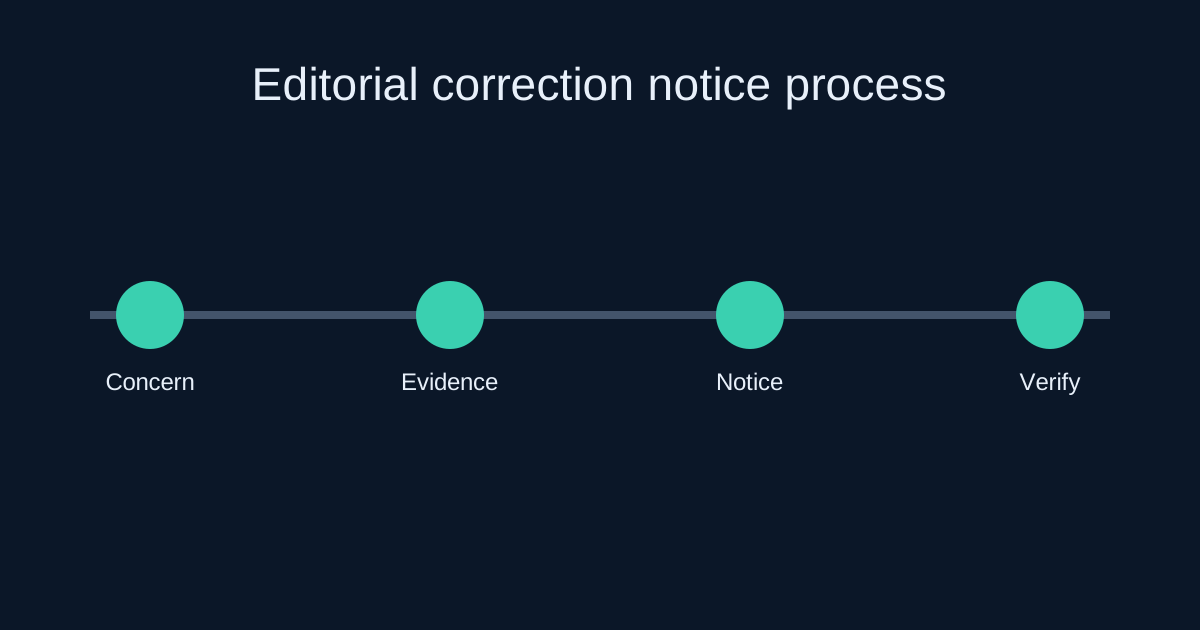
A correction starts with the reader, not with the embarrassment of finding an error. Record the exact published wording, the route, the time the concern arrived, and the evidence that puts the passage in doubt. Then describe the practical consequence.
A misspelled name and a mistaken product limitation both deserve repair, but the second can change a reader's decision and calls for a more visible explanation.
Do not quietly polish the surrounding paragraph while the central claim remains uncertain. Assign one editor to preserve the original language, contact the relevant subject owner, and decide what can be verified now. If verification will take time, narrow or remove the disputed statement rather than leaving a confident sentence in place.
The log should distinguish the report, the finding, and the final editorial judgment.
Choose the correction readers need
Use the smallest notice that still tells the truth about the change. A typographical repair that never altered meaning may need only the corrected page and an internal record. A factual change that affects scope, comparison, instructions, or a conclusion should carry a visible note near the article.
State what was wrong, what is correct, and when the page changed. Avoid defensive detail about how the mistake happened unless that context helps readers evaluate the new version.
A notice is not an opportunity to repeat an unsupported claim. Link the corrected sentence to evidence when a source is useful, and name uncertainty plainly when the available record is incomplete. Keep the original publication date.
Use the modification date only when the page has received a material update, and make sure the visible note and metadata tell a consistent story.
Write the notice in plain language
Draft the correction after the underlying text is settled. A useful pattern is: this article previously said X; the accurate statement is Y; the article was corrected on this date. Adapt that pattern to the actual consequence rather than forcing every repair into identical wording.
Never say a page was updated for clarity when the real change fixes a factual error. That phrasing hides the information a returning reader needs most.
Ask a reviewer who did not make the original edit to compare the saved passage, supporting source, replacement text, and notice. The reviewer should be able to answer four questions without private context: what changed, why it changed, where the new evidence appears, and whether the article's conclusion also needed revision. If any answer is unclear, the correction package is not ready.
Follow the claim beyond the article
The incorrect wording may have traveled into a newsletter, sales handoff, social post, downloadable file, structured data field, or another article. Search for distinctive phrases and inspect known distribution records. Correct each controlled copy according to its format, and alert an owner when a third party controls the destination.
A corrected source page does not automatically repair a screenshot or excerpt that readers can still encounter elsewhere.
Prioritize representations that preserve the wrong decision, not merely those that are easiest to edit. Record each destination, owner, action, and verification result. The related content distribution handoff should carry the approved correction language so channel owners do not improvise a second explanation.
Close the record without erasing it
Request the public URL after release and read the changed passage in context. Confirm that the notice is visible, links open, dates agree, and cached preview text does not restate the error. Save the final source, reviewer, publication time, and affected destinations in the correction record.
Closure means the known surfaces were checked and unresolved surfaces have owners, not that the uncomfortable history disappeared.
Review correction records periodically for repeated causes such as ambiguous briefs, missing subject review, or copied claims without provenance. Improve the relevant workflow without turning an individual notice into blame. The durable lesson belongs in the process; the public note should remain concise, factual, and useful to the reader who relied on the earlier version.
Set the response path before an error arrives
Publish a simple way for readers and subject owners to report a concern. The intake should collect the affected URL, disputed passage, reason for concern, and any direct evidence without requiring the reporter to diagnose the editorial cause. Route the report to a monitored owner and acknowledge it without promising a conclusion before review.
Define who may remove a risky statement, who approves replacement wording, and who decides whether the notice must appear on other surfaces. An urgent temporary edit should remain traceable to the preserved original, reviewer, evidence, and follow-up decision. Access controls should protect the log without making the public correction dependent on one person's availability.
Review the notice as a returning reader
Read the page from the position of someone who acted on the earlier wording. The notice should identify the material difference quickly enough that the reader does not need to compare archived copies. If the correction changes a recommendation or conclusion, revise those downstream passages rather than attaching a note to text that still points in the old direction.
Check the notice on mobile, in the page's reading order, and with links opened in a fresh session. A visually subtle label may satisfy an internal checklist while remaining easy to miss. Keep the wording calm and specific, since a correction earns trust through accuracy and visibility rather than apology theater.
Sources
- SPJ Code of Ethics, Society of Professional Journalists. Directs journalists to acknowledge mistakes and correct them promptly and prominently, supporting the reader first correction principle used here.
Related GTM guides
Frequently asked questions
Does every edit need a public correction notice?
No. Keep an internal record for routine copy repairs, but use a visible notice when the original wording misstated a fact, changed practical guidance, or could alter a reasonable reader's conclusion. The notice should match the consequence rather than the editor's discomfort.
Can a correction remove the original publication date?
Keep the original publication date and add an accurate modification date when the correction is material. The visible notice, page metadata, and correction log should agree about when the repair occurred.
Who should review a correction notice?
Use a reviewer who did not make the original edit. They should compare the preserved passage, evidence, replacement text, notice, related conclusions, and known distributed copies before the corrected route is accepted.